If you want to convert old slides and film into clear digital files, these five scanners offer reliable, standalone digitization without requiring a computer. They’re best for collectors with large 35mm archives, families preserving heirlooms, and hobbyists digitizing vintage media. The following picks balance image quality, ease of use, and display features to help you decide which is right for your collection.
Summary of chosen products:
| Product | Best For | Key Benefit | Limitations |
|---|---|---|---|
| KODAK Slide N SCAN Film & Slide Scanner | Families and historians | Built-in 5″ LCD for immediate viewing | Requires SD card for saving files |
| Magnasonic All-in-One 24MP Film Scanner | Large collections | High 24MP output with HDMI option | Internal memory is modest |
| KODAK Slide N Scan Max Digital Film Scanner | Power users | Tiltable 7″ LCD and gallery mode | Higher price point |
| DigitPro 35mm Film & Slide Scanner (2.4″ LCD) | Casual archivers | Standalone, easy one-touch scanning | Smaller LCD limits viewing comfort |
| Photo Scanner And Film Digitizer With 5” Screen | All-in-one home use | 5” display, supports multiple formats | Some models have limited memory |
KODAK Slide N SCAN Film & Slide Scanner
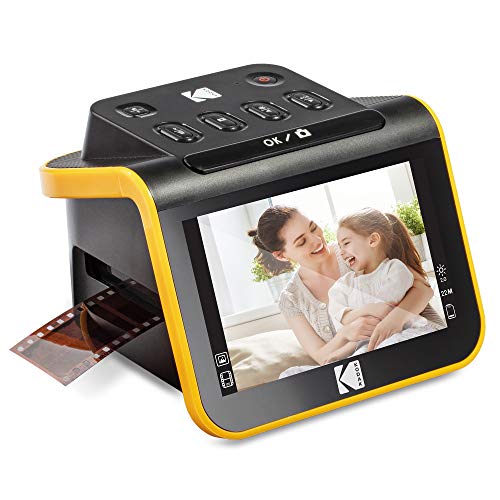
Designed to convert 135, 110, and 126 film and slides into digital JPEGs, this scanner includes a 5” LCD display for on-device review and editing. It reads from a variety of film types and saves to an SD card (not included). It’s best for users who want a self-contained solution with a built-in gallery view to share memories instantly. Best for households digitizing mixed slide collections and for users who value a direct-from-device preview.
- Supports 135, 110, and 126 formats with adapters and a 50mm slide holder.
- Large 5” LCD helps preview and edit without a computer.
- Fast-load feed tray enables quick batch scanning.
Best for: Families and personal historians who want an all-in-one solution with a gallery-style display. Caution: SD card storage is required for saving scans, and SD card not included.
Magnasonic All-in-One 24MP Film Scanner

This scanner converts 35mm, 110, 126, Super 8 film, and various slides into 24MP digital JPEGs. It features a 5″ LCD for real-time viewing and an HDMI output option for larger screens. Built-in memory plus SD card support provide flexible storage. It’s best for users who want high-resolution results and the option to view on a TV or monitor, making it a strong choice for archival projects or shared family viewing.
- 24MP digital JPEG outputs for sharp results.
- 5″ LCD display and HDMI output for external viewing.
- 128MB internal memory plus SD card expansion up to 128GB.
Best for: Archival projects and households that prioritize high image quality and versatile viewing. Caution: Internal memory is limited, so plan for SD storage to maximize capacity.
KODAK Slide N Scan Max Digital Film Scanner

This model upgrades with a tiltable 7″ LCD and enhanced gallery mode, enabling more precise editing and previewing before saving. It uses a 13MP sensor to digitize color and B&W negatives and slides. It’s best for serious digitizers who want a larger, adjustable viewing area and a streamlined workflow from slide loading to saved files. Consider this if you frequently review or present digitized memories on a big screen.
- Tiltable 7″ LCD for flexible viewing angles.
- Gallery mode and quick-feed tray to speed up large projects.
- 13MP sensor for better color and detail reproduction.
Caution: Higher capability comes with a larger footprint and price; ensure you have adequate workspace for the larger unit.
DigitPro 35mm Film & Slide Scanner (2.4″ LCD)

This all-in-one scanner converts 135 negatives and slides to high-quality JPEGs with a compact 2.4″ LCD for quick previews. It includes a quick slide feeder for faster loading of framed slides up to 2mm thick. It’s best for casual archivers who want a portable, computer-free device with a simple one-touch workflow.
- Standalone operation without software required.
- 2.4″ LCD for on-device preview and quick playback.
- Fast-loading slide feeder enables continuous scanning.
Limitation: The smaller LCD may be less comfortable for detailed color checking; pair with a larger display if precision is critical.
Photo Scanner And Film Digitizer With 5” Screen
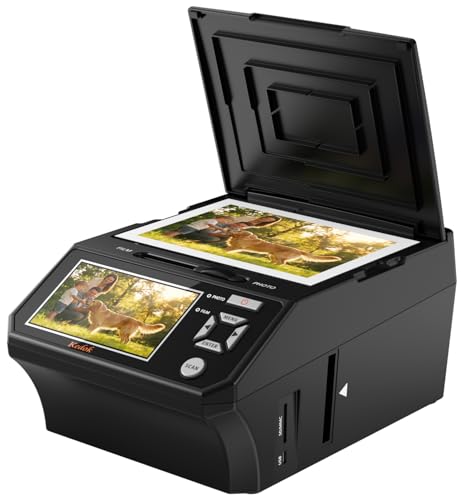
This versatile all-in-one digitizer supports 35mm and 110 negatives, slides, and printed photos. It includes an 8GB SD card and a large 5” display for direct viewing and sharing. It’s best for households seeking a single device to handle mixed media types and provide immediate on-device viewing, without a computer.
- Supports negatives, slides, and printed photos.
- 5” LCD provides easy on-device review and slideshow viewing.
- Includes 8GB SD card for storage; standalone operation.
Tip: Ensure the SD card capacity meets your scanning volume, especially for large batches of images.
Buying Guide: Key Purchase Considerations
What to look for when choosing a slide-to-digital scanner:
- Display size and quality: A larger LCD helps with color accuracy and editing on-device. If you plan to edit extensively, prefer models with 5″ or larger displays or HDMI output to view on a TV/monitor.
- Supported formats: Confirm the scanner handles 35mm, 126, 110, and slide formats you own. Some models add Super 8 film support for broader archives.
- Storage options: Most devices save to an SD card or internal memory. Check the maximum SD card size and whether the device includes internal memory you can rely on.
- One-touch vs. advanced controls: If you want simplicity, choose models with one-touch scanning. For precise color correction, prefer units with adjustable brightness, color, and exposure.
- Feeding mechanism: A fast, continuous-feeding tray reduces handling time and minimizes jams or misfeeds. Quick-load feeders are a plus for large collections.
- Compatibility: Ensure the device’s file formats (JPEG, TIFF) meet your needs and that any required adapters or mounts are included or readily available.
- Portability and setup: Standalone scanners are convenient, but consider size and weight if you have a lot of slides to digitize and limited workspace.
FAQ
- Do these scanners require a computer to digitize? Most listed units can operate standalone, with results saved to an SD card or internal memory. Some offer HDMI output for viewing on a larger screen.
- What is the best format for saved images? JPEG is common for everyday sharing and archiving; higher-end devices may offer RAW or TIFF options if supported.
- Can I scan both negatives and slides with the same device? Yes, several models support 35mm negatives and slides, plus 110 and 126 formats with appropriate adapters.
- Is the LCD display important for editing? A larger LCD helps with color checks and quick edits on-device, especially if you don’t plan to connect to a computer frequently.
- What about film sizes beyond 35mm? Some scanners support additional formats like Super 8 film; verify format support before purchasing if you have a mixed archive.