When choosing a trail camera with video, look for reliable motion triggers, clear daytime and nighttime video quality, battery or solar options, and cellular or local storage features that fit your needs. This guide highlights five top options that balance value, reliability, and performance for different buyers—from hunters to property monitors and wildlife researchers. The top picks include cellular models for remote monitoring, non-cellular cameras for simple setups, and models with high-resolution video to capture fine details in both day and night footage.
Overview table of selected products:
| Product | Best For | Key Strength |
|---|---|---|
| SPYPOINT Flex-M Twin Pack | Cellular monitoring, multi-camera setups | Cellular transmission with free plan, cross-carrier reliability |
| WOSODA 2 Pack Trail Camera | Budget-friendly scouting, high-resolution stills | 30 MP photos, 1080P video, quick trigger |
| MAXDONE Solar Trail Camera | Long-term use, solar charging | 4K video, 64MP photos, rechargeable battery |
| GardePro E6 WiFi Trail Camera | Non-cellular, easy remote viewing via app | 64MP photos, 1296P video, live view |
| TKENPRO 4G LTE Trail Camera | AI detection, unlimited data options | 2K live feed, built-in SIM, unlimited plans |
SPYPOINT Flex-M Twin Pack: Cellular Trail Cameras

The SPYPOINT Flex-M Twin Pack is designed for seamless, field-ready cellular monitoring. Best for: hunters or land managers who want real-time updates without manual data collection. The cameras support dual-SIM LTE, IP65 weather resistance, and night vision, with 28MP photos and 720p videos with sound. The model emphasizes “no WiFi needed” operation and cross-carrier performance, simplifying setup in remote areas. A notable benefit is SPYPOINT’s free photo transmission plan, which covers a limited monthly allotment, making it attractive for budget-conscious users. Caution: ensure the ecosystem aligns with your preferred monthly plan, as data usage will affect ongoing access.
WOSODA 2 Pack Trail Camera: Night Vision and 30MP Photos

This two-pack from WOSODA concentrates on value with rapid trigger speed and strong daytime resolution. Best for: wildlife watchers who want high-detail images and reliable motion activation at an affordable price. The cameras promise 0.3-second trigger speed and up to 60 feet detection distance, plus 30 MP photos and 1080P video. The infrared night vision uses 850nm LEDs for clear nighttime shots. A limitation is the inclusion of two memory cards (32GB each) rather than higher-capacity options, which may matter for longer scouting trips.
MAXDONE Solar Trail Camera: 4K Video On The Go
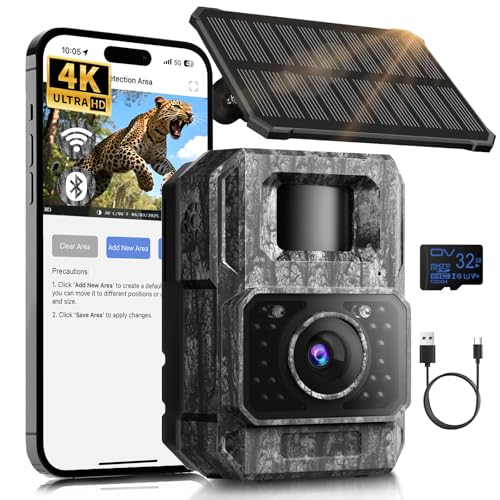
MAXDONE’s solar-powered design aims at long deployments with minimal maintenance. Best for: remote sites where power access is limited, or for long-term wildlife surveillance. It does 4K 64MP imagery and comes with a large 6000mAh rechargeable battery, plus a solar panel design optimized for charging efficiency. Important note: this model does not connect to home Wi-Fi and does not require internet for operation; files are downloaded via its own setup range. It includes a 32GB SD card. Some users may want larger storage for high-frequency footage in busy habitats.
GardePro E6 WiFi Trail Camera: On-Site Viewing

The GardePro E6 offers a non-cellular, WiFi-enabled experience that prioritizes immediate access via mobile app connectivity. Best for: users who want quick, local access to footage without cellular plans. It delivers 64MP photos and 1296P HD video, with live view via a smartphone connection up to about 45 feet. This model is ideal for those who prefer straightforward setup and real-time preview, but it won’t stream footage over cellular networks or provide remote alerts without adding a separate network solution.
TKENPRO 4G LTE Trail Camera: 2K Live Feed

TKENPRO focuses on AI-assisted detection and flexible data plans. Best for: scouting teams that want automatic species detection and a crisp 2K live feed, with built-in SIM for cellular connectivity. The camera supports 4G, uses unlimited data trial options, and includes AI forecasting features to anticipate wildlife activity. A caveat: AI features require cloud storage to function; plan compatibility should be checked before purchase. The built-in SIM helps maintain connectivity across carriers, which is helpful in changing network conditions.
Buying Guide
What features matter most for trail cameras with video?
- Video resolution and frame rate: Higher resolution provides clearer footage but requires more storage.
- Trigger speed and detection range: Faster triggers capture more activity, especially for fast-moving wildlife.
- Power options: Battery-only, solar charging, or hybrid options influence deployment duration and maintenance.
- Connectivity: Cellular models enable remote alerts; non-cellular models rely on SD cards or local viewing.
- Weather resistance: IP ratings indicate suitability for rain, dust, and cold environments.
How to choose between cellular and non-cellular cameras?
- Cellular cameras are best for remote monitoring without site visits, but require data plans and reliable cellular coverage.
- Non-cellular cameras are simpler and cheaper long-term, ideal for on-site security or fixed surveillance with periodic data retrieval.
Storage decisions and battery life matter. Consider cameras that support larger SD cards for busy locations and models with long-lasting batteries or solar options to reduce maintenance.
FAQ
- What is the best trail camera for night footage?
Look for no-glow infrared or white-light options with strong low-light performance. Many models in this guide offer clear night vision, but performance varies by sensor and LED type.
- Do I need cellular service for video trail cameras?
No, not necessarily. Cellular models provide remote access and alerts, while non-cellular cameras rely on local storage and viewing.
- Can I use solar power with trail cameras?
Yes, several options in this guide include solar charging or are compatible with solar panels to extend deployment time.
- What should I consider when buying AI animal detection?
AI features can help identify species and predict activity, but may require cloud storage and ongoing data plans.
- How important is trigger speed?
Trigger speed determines how quickly the camera captures action after movement is detected. Faster speeds reduce missed moments in active habitats.
- Is 4K video necessary for trail cameras?
4K offers the highest detail but consumes more storage and power. For most wildlife monitoring needs, high-quality 1080P or 2K is sufficient.